05 / 5FAQ
We don't hide the answers we already have.
Who it is for — and just as plainly, who it is NOT for.
01What is AkademiUsta?+
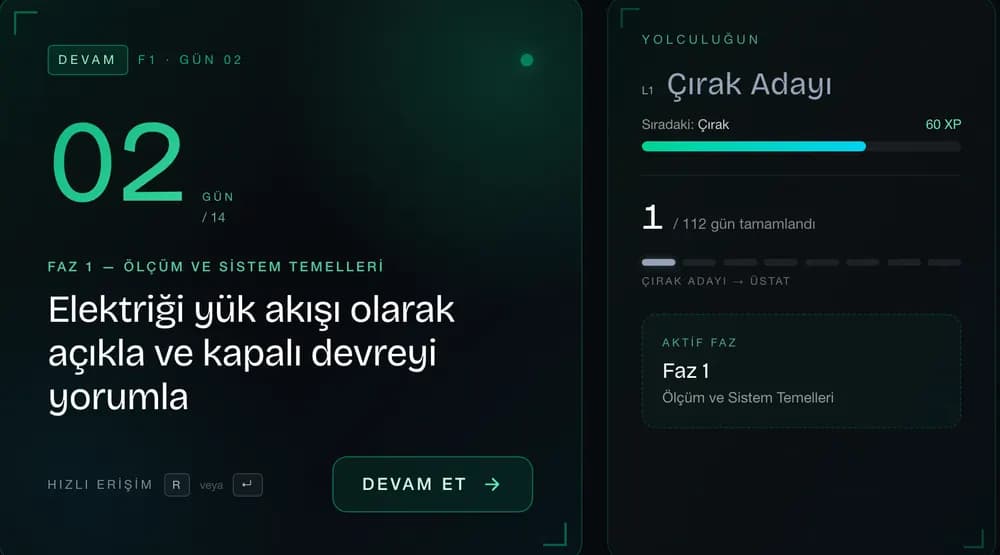
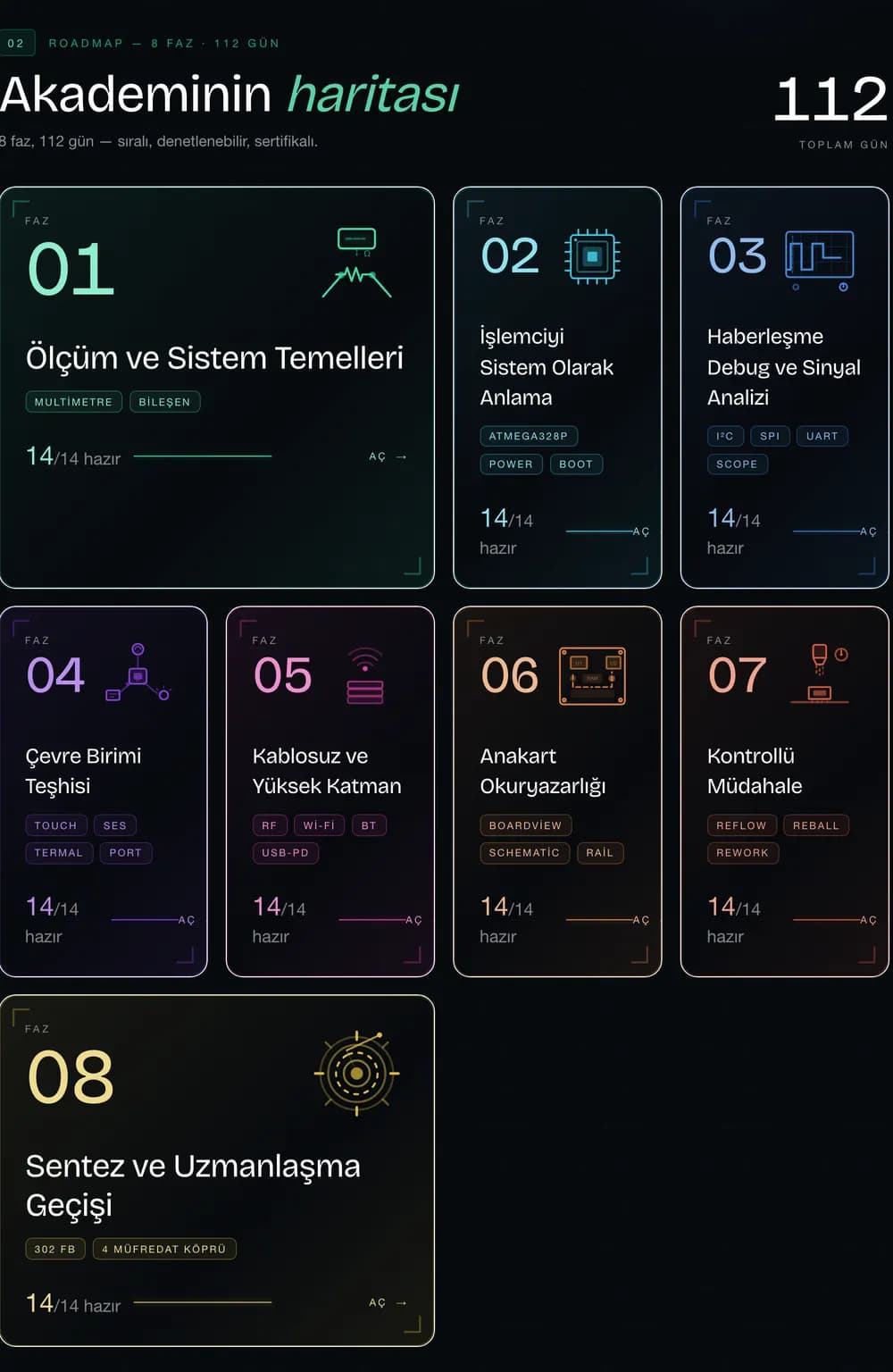
A structured program teaching electronics and Apple board-level repair. Two separate paths. Electronics · Processor-Level (8 phases · 112 days) starts from zero and moves in order: Measurement & System Foundations → Processor Systems → Communication Debug & Signal Analysis → Peripheral Diagnosis → Wireless & Upper Layers → Board Literacy → Controlled Intervention → Synthesis & Mastery. Apple Board Repair (6 modules · 80 days) carries that logic onto the device: Schematic & Board Reading → iPhone Logic Board → iPad Logic Board → MacBook T2 → MacBook M-Series → Lock & Ethics. One lesson per day, each with check questions, plus two separate assistants wherever you get stuck.
02Is it free?+
Phase 1 of Electronics (14 days) and Module 1 of Apple Board Repair (8 days) are completely free — no time limit, no credit card, no automatic charge. Full access is one-time and lifetime: Electronics $499, Apple Board Repair $999.
03Is there a refund?+
No. Access opens the moment the payment is confirmed, so there is no withdrawal or refund after payment. The decision is made before paying instead: Phase 1 of Electronics (14 days) and Module 1 of Apple Board Repair (8 days) are free with no time limit — you see the lesson format, the bench exercises and the assistants yourself before any money changes hands.
04Who is this NOT for?+
Not for someone looking for parts swapping (screen, battery, housing) — this program teaches board-level diagnosis, not module replacement. Not for someone who wants a shortcut: the path is 112 and 80 days, sequential, and skipping breaks it. Not for someone who will only watch: a multimeter, a soldering station and a bench power supply are used throughout, and a microscope is needed in the later phases. And it does not promise guaranteed income — it teaches a skill, it does not sell a job.
05Is this work physically risky?+
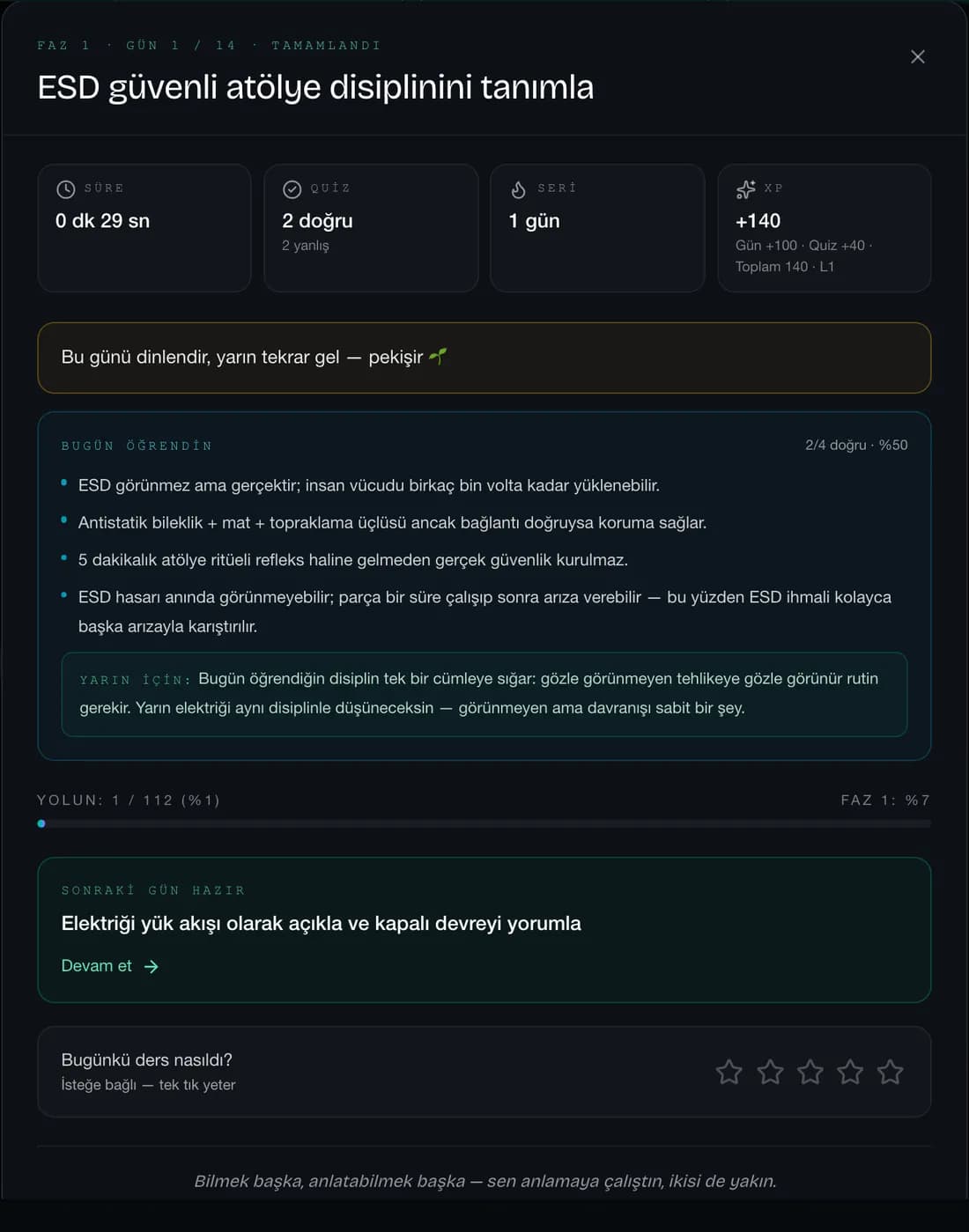
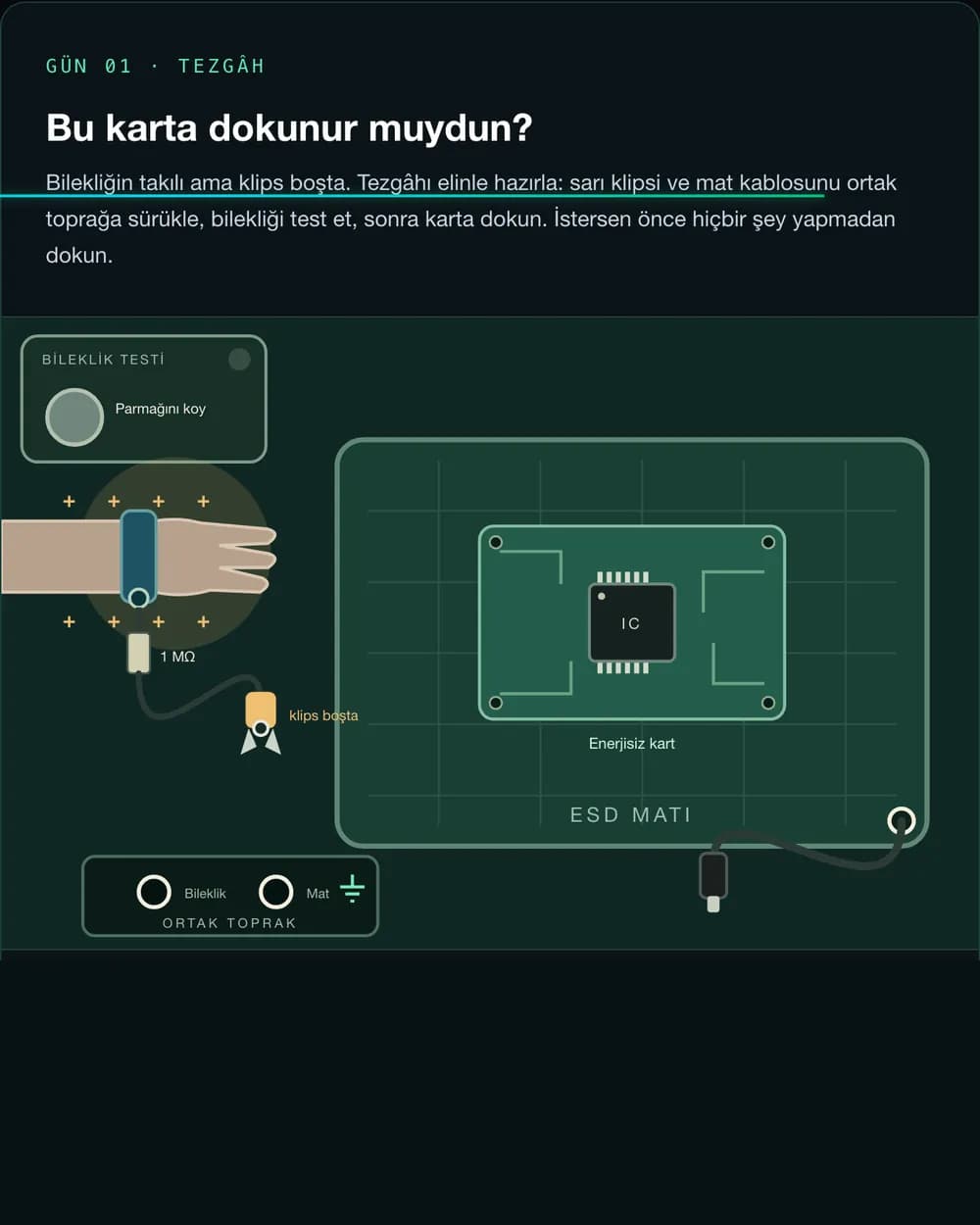
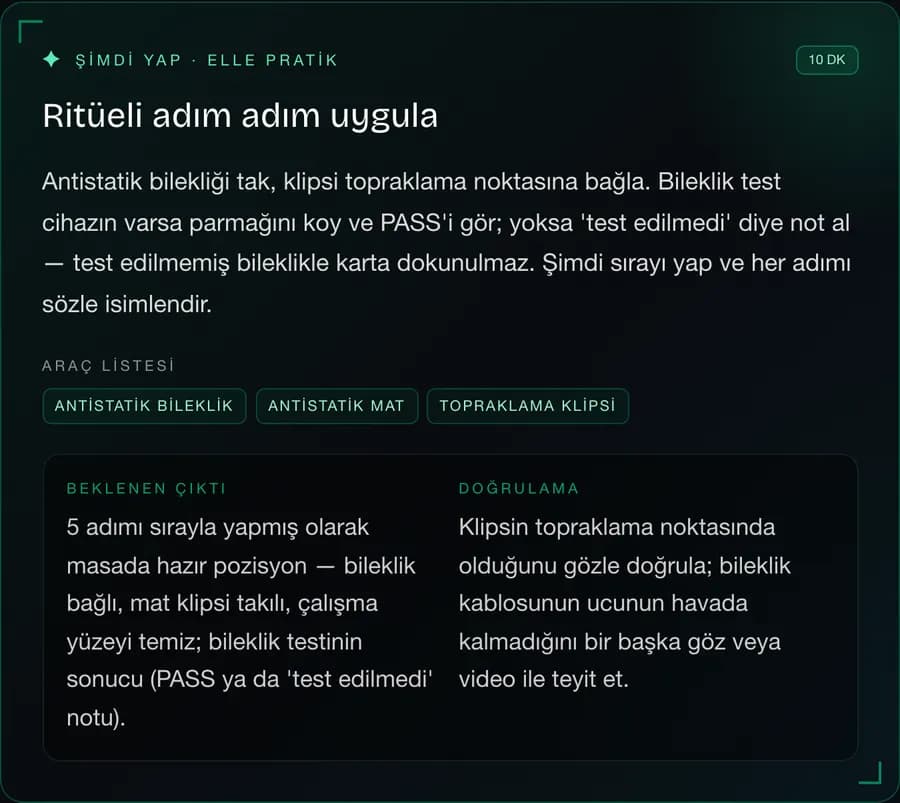
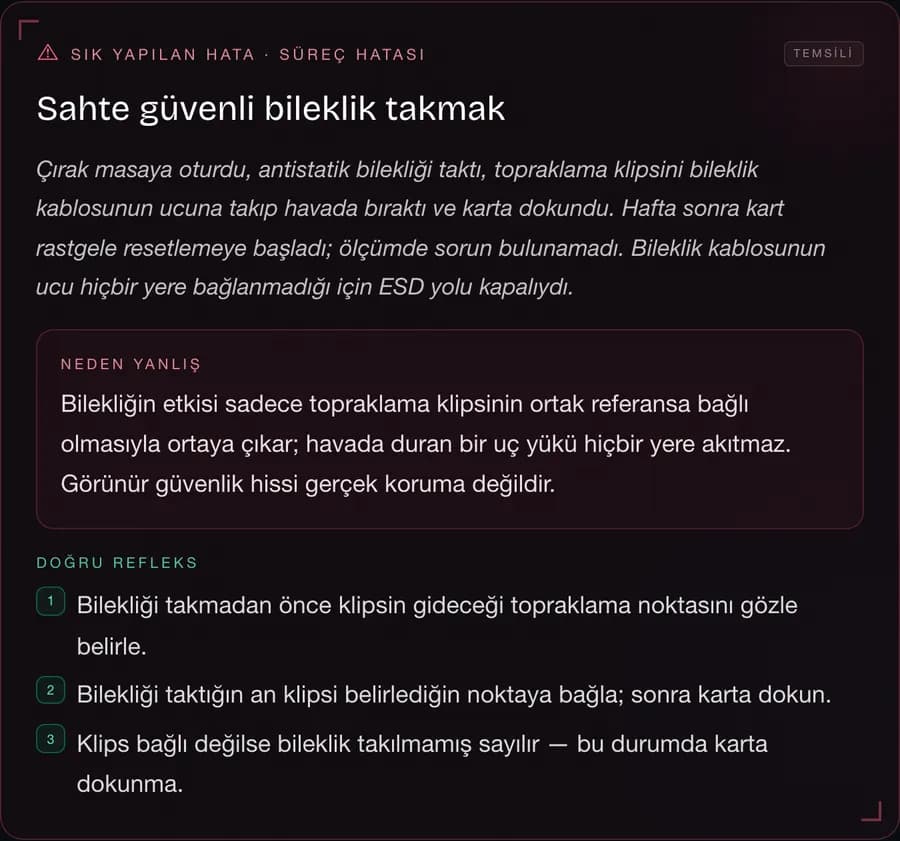
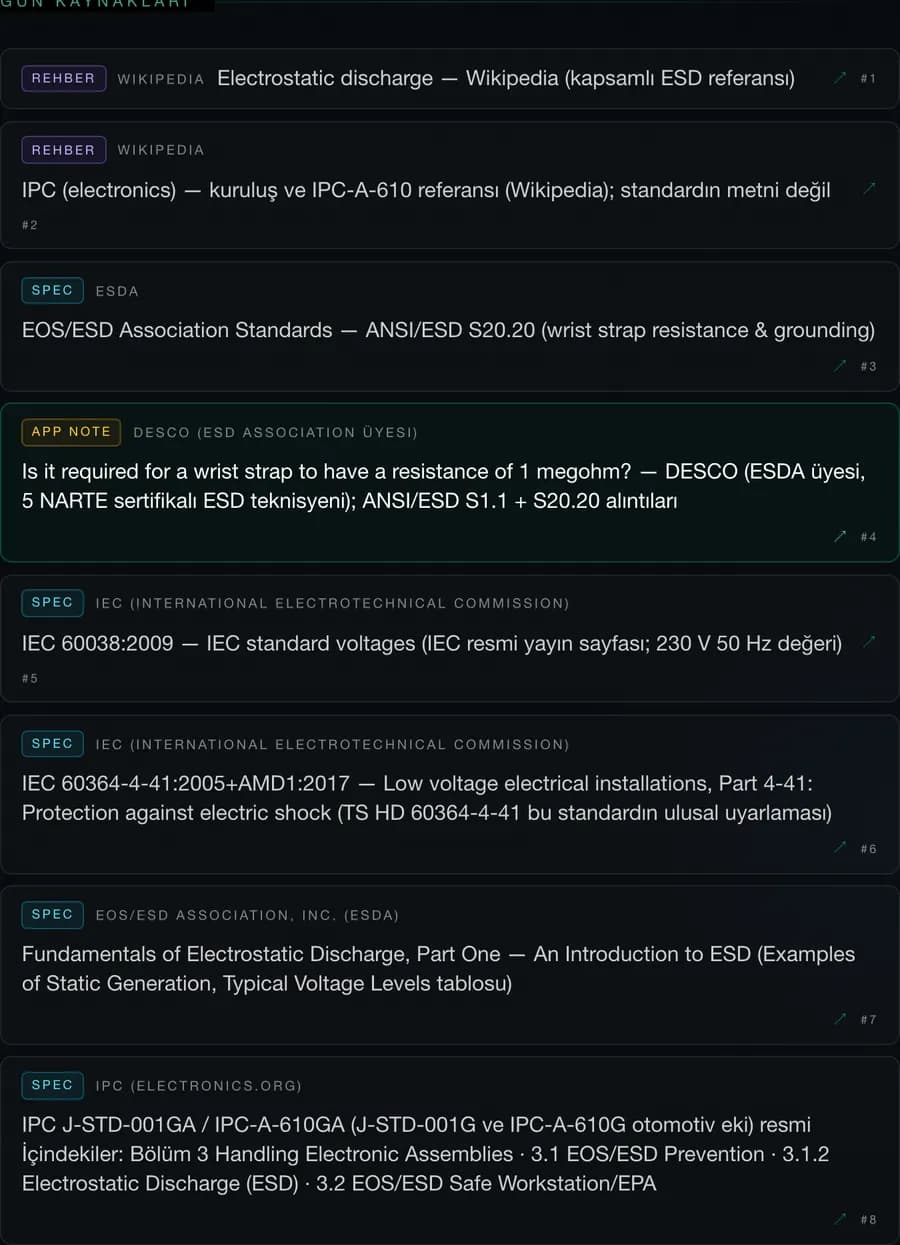
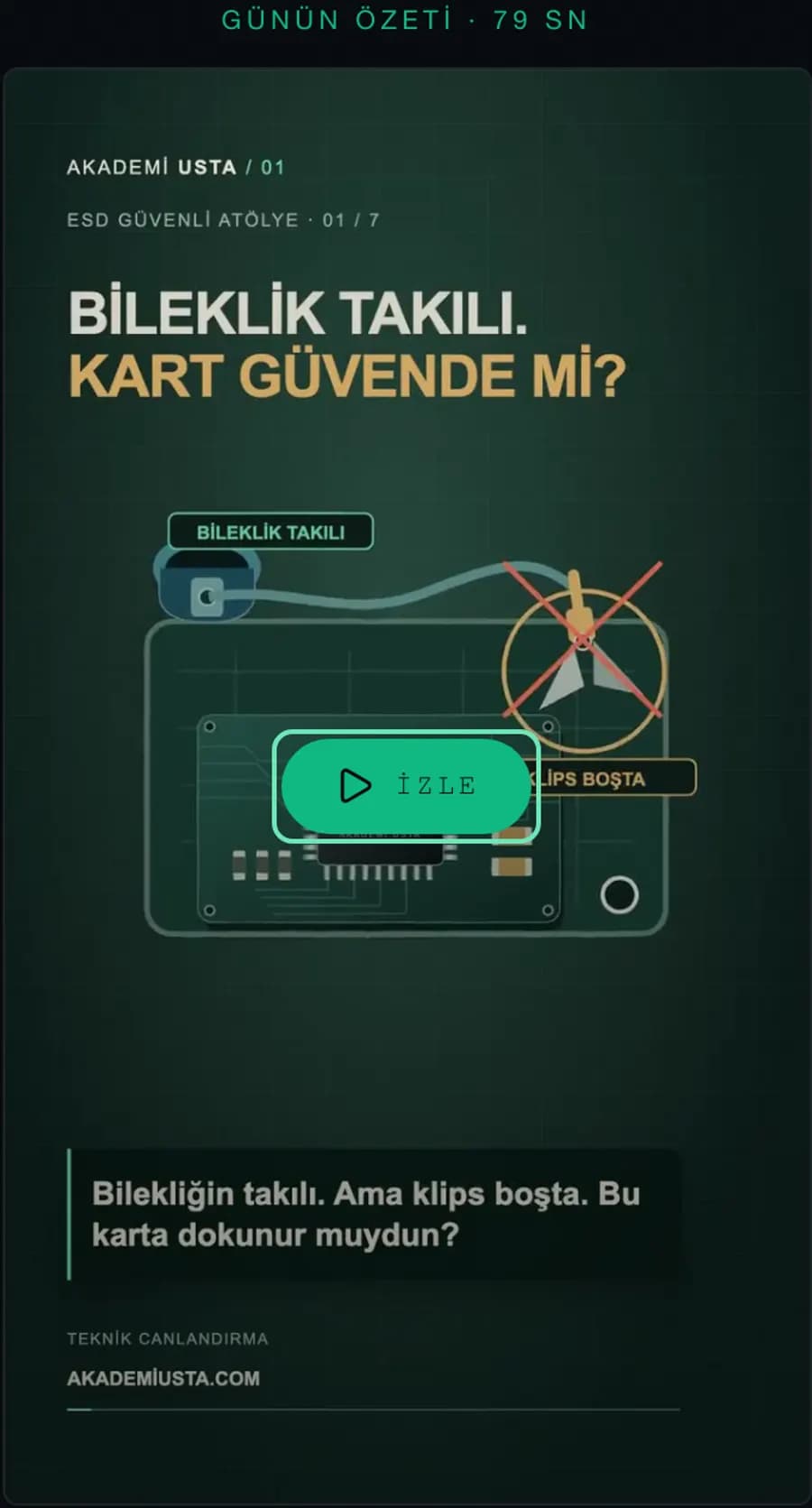
Yes — this is real bench work. Throughout the program you use a soldering iron reaching 300 °C, lead-bearing solder, flux fumes and a mains-fed adjustable power supply. That means a ventilated bench, eye protection and care around mains electricity; the safety of your own working environment is your responsibility. Safety is taught inside the lessons — Phase 1 Day 1 is called "ESD and bench discipline", and ESD, fumes and ventilation come back across the curriculum. But you decide whether to set up a bench before you pay, so we say it here too.
06Do I need prior electronics knowledge?+
No. Phase 1 starts with multimeter use, ESD safety and series/parallel fundamentals. MOSFETs, diodes and other basic components are taught from zero. For those with no soldering experience, soldering reflexes are built gradually across phases 2–3.
07Which devices will I learn to repair?+
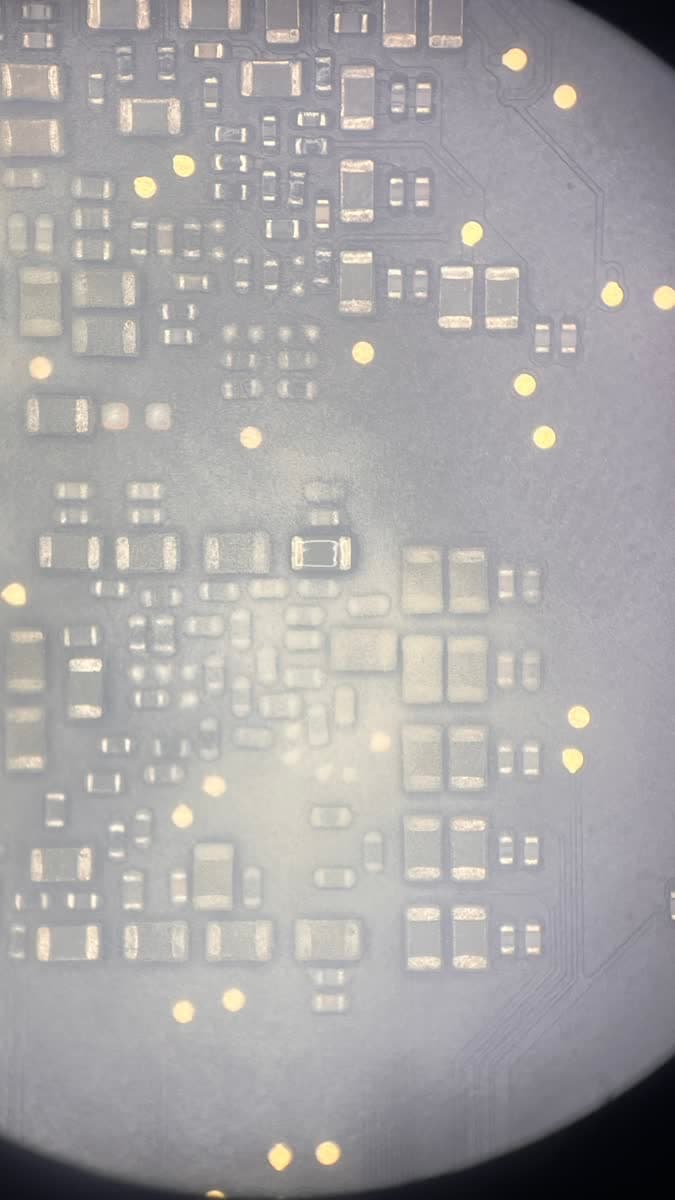
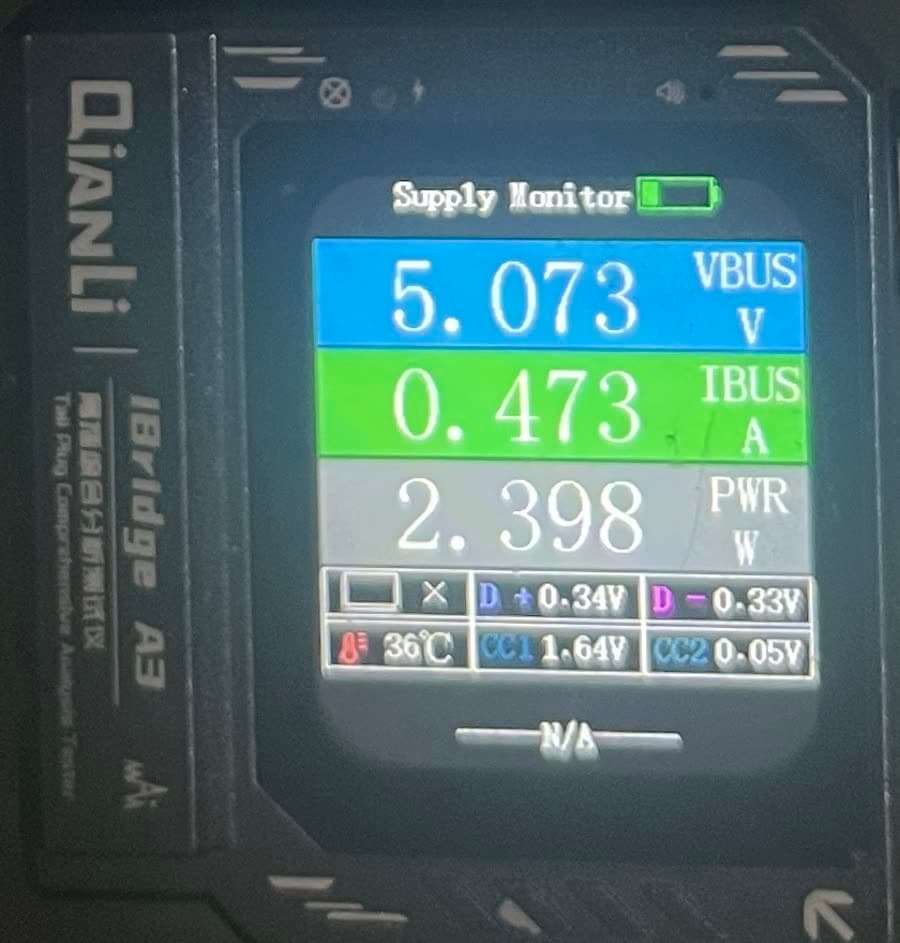
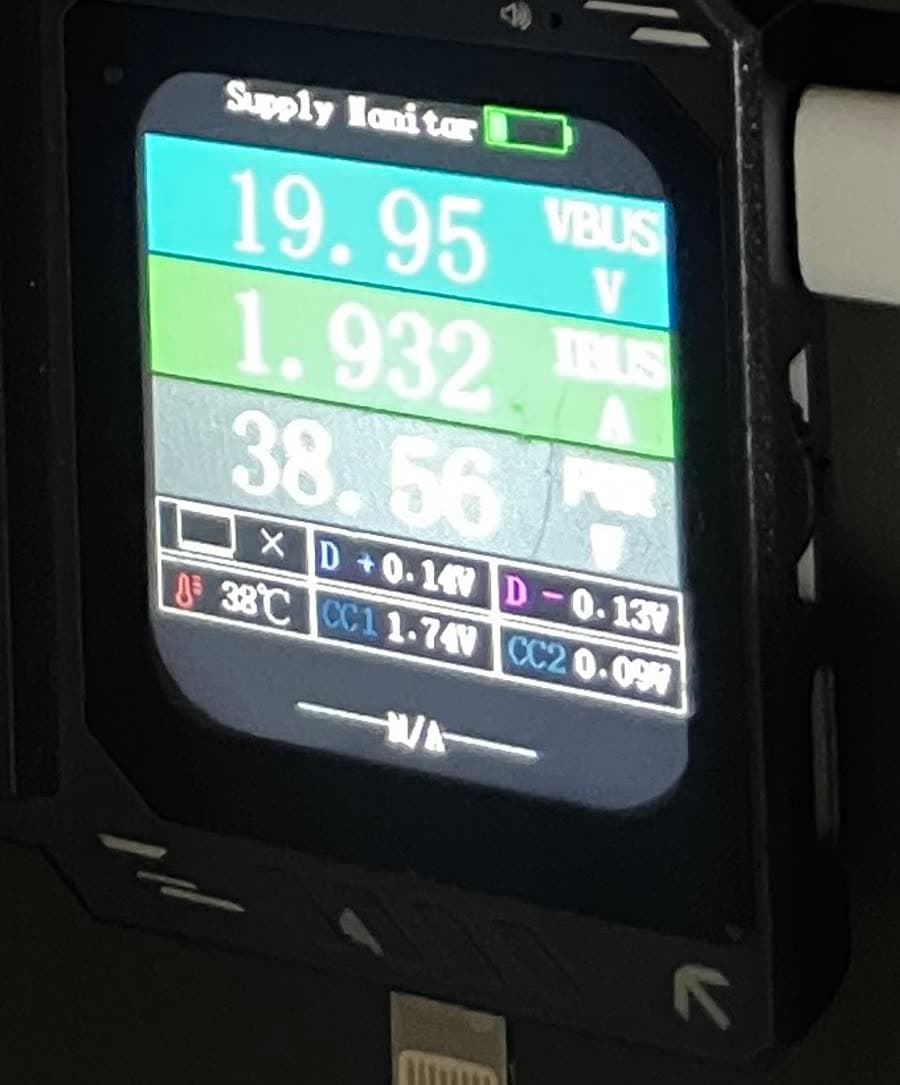
iPhone, iPad and MacBook — at board level. On the MacBook side both the Intel/T2 generation and Apple Silicon M-series have their own modules. Topics: power rails and rail maps, charging and USB-C PD, display and camera lines, Face ID and Touch ID, NAND/SSD, BGA work, and schematic reading through boardview. Every module runs on real case files — board number, measured value, outcome.
08Is it only Apple? Any other brands or platforms?+
The Electronics program is brand-independent — what it teaches is the logic of a circuit, not of one device. Processor thinking is built on AVR/ATmega and Arduino; different architectures are compared through STM32 and ESP32; Qualcomm Snapdragon, MediaTek, Intel and Samsung platforms are worked through with real examples. The point is to think by processor, not by brand. Apple depth comes in the second program — but whoever arrives there can already read the system.
09Who helps when I get stuck?+
First, plainly: this is not handed over to an AI. When you get stuck you can reach İlham directly, one to one — you write on WhatsApp, and the person answering is the master who has been at the bench since 2005. No call centre, no ticket system, no layer in between. Alongside that there are two assistants, each for a different job: the in-lesson assistant answers from that day's lesson without making you leave the page; the Live Repair Assistant takes the symptom and the values you measured at the bench and suggests the next measurement. Both are backed by our own curriculum and case archive — not a general chatbot. So the order is simple: the assistant for a fast answer, İlham for a real decision.
10Do you teach how to bypass locks?+
We cover locks as separate topics: iCloud/Activation, EFI/firmware and MDM, each on its own. For each we explain how it works, how it differs across device generations and — where legitimately possible — how it is removed, along with why these are not repair faults. Ethics comes first: the work is done only with proof of ownership, never for a stolen or unauthorised device; that is a legal and ethical decision, not a technical one. The lock/EFI cases in the bench log are real service work done under exactly that principle.
11Will I get a certificate?+
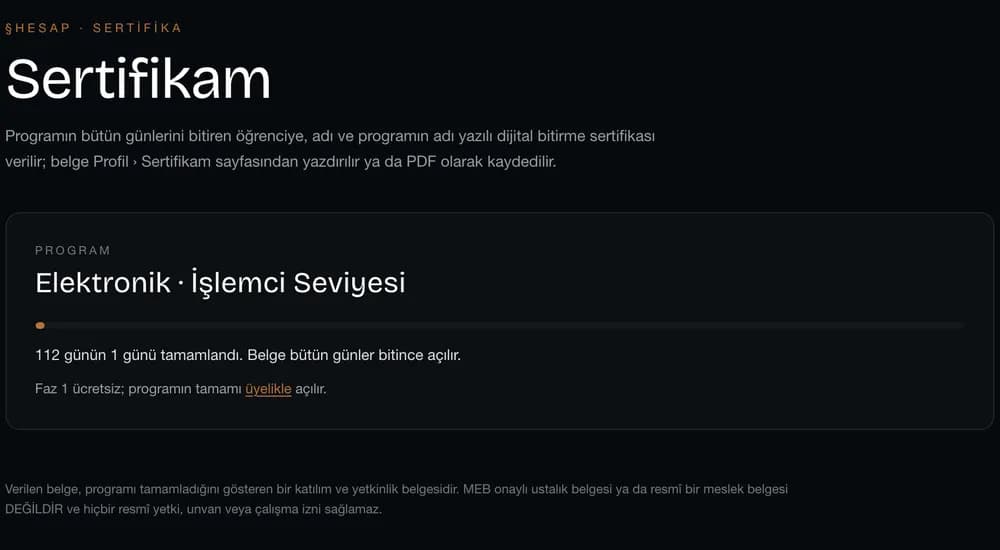
Students who finish every day of a program receive a digital certificate of completion showing their name and the program name; print it or save it as PDF from Profile › My certificate. There is no public verification page or QR code. The document issued is a certificate of participation and competence for completing the program. It is NOT a state-issued vocational qualification (such as Turkey's MEB ustalık belgesi) and grants no official title, authority or right to practise.
12Will I earn the fee back from repairs?+
We do not promise that. What you earn depends on your bench, your region and how much work you take on. The repair records on this page are İlham's own service jobs, not student income. The only honest measure is yours: the price of one device you had to send back unsolved is what the program is measured against.
13How long does it take, and how many hours a day?+
Electronics has 112 lesson days, Apple Board Repair 80; one lesson per day, at your own pace, with no time limit and no expiry. We do not publish an hours-per-day figure because we have not measured it.
14Is the course in Turkish or English?+
The primary language is Turkish. English interface and content support is active (EN locale). Technical terms (Vcc, GND, MOSFET, I²C, BGA, IPC-A-610) stay international; descriptive terms are localised.
Still have a question? Ask directly through the channels below — İlham answers.